What Happens After Your Septic Tank Has Been Pumped and Cleaned?

How is Septic System Looks
Many homeowners understand the importance of septic tank pumping, but only a few know what actually happens inside the septic system after the tank has been cleaned. A common misconception is that a pumped septic tank should remain empty. In reality, a properly functioning septic tank is always full of liquid. The purpose of the tank is to separate solids, scum, and wastewater while allowing treated effluent to flow safely to the drain field.
At Modern Septic Service, we have over 63 years of combined experience in the septic industry, helping homeowners throughout San Diego County maintain healthy septic systems. One of the most common questions we hear is, "What happens after my septic tank has been pumped?" Understanding the answer can help you protect your investment, extend the life of your septic system, and avoid costly repairs.
Day 1 to Week 1: Your Septic System Resets
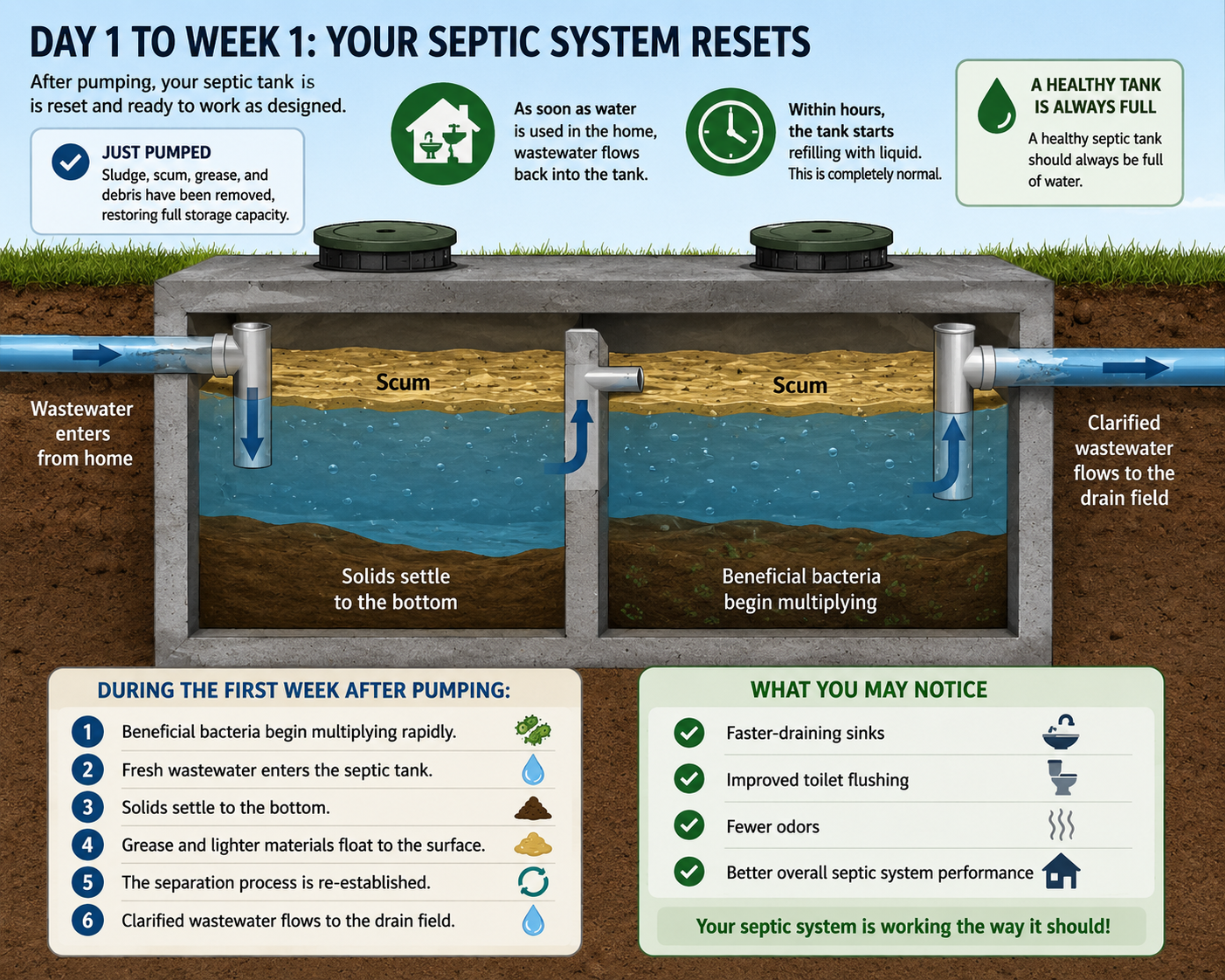
FIrst Week Septic Tank Function
Immediately after septic tank pumping, the accumulated sludge, scum, grease, and floating debris have been removed from the tank. This restores the septic tank's storage capacity and allows it to operate as designed.
As soon as water is used in the home, wastewater begins flowing back into the septic tank. Within hours, the tank starts refilling with liquid. This is completely normal. In fact, a healthy septic tank should always be full of water.
Many homeowners believe a septic tank should be completely cleaned and sterilized during pumping. However, experienced septic professionals understand that a healthy septic system relies on naturally occurring bacteria to break down organic waste. For this reason, reputable septic companies such as Modern Septic Service do not attempt to make the inside of the tank sterile. A small amount of residual sludge and beneficial bacteria typically remain on the tank walls and surfaces, helping the biological process restart quickly.
During the first week after pumping:
Beneficial bacteria begin multiplying rapidly.
Fresh wastewater enters the septic tank.
Solids settle to the bottom.
Grease and lighter materials float to the surface.
The separation process is re-established.
Clarified wastewater flows to the drain field.
Many homeowners notice faster-draining sinks, improved toilet flushing, fewer odors, and better overall septic system performance during this period.
First 6 to 12 Months: Biological Balance Is Fully Restored
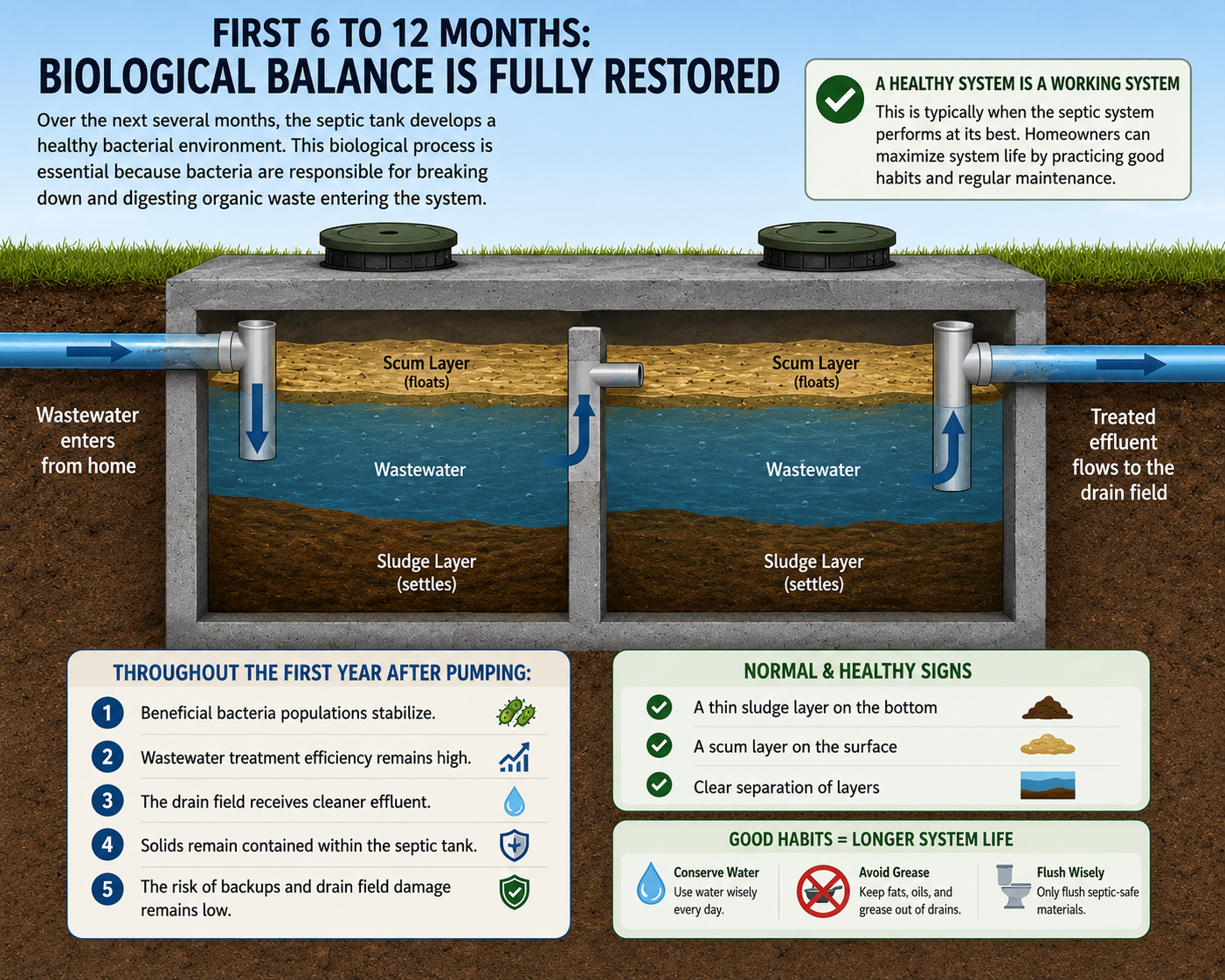
Over the next several months, the septic tank develops a healthy bacterial environment. This biological process is essential because bacteria are responsible for breaking down and digesting organic waste entering the system.
During this stage, the septic tank gradually builds a thin sludge layer on the bottom and a scum layer on the surface. These layers are completely normal and indicate that the septic system is operating correctly.
Throughout the first year after pumping:
Beneficial bacteria populations stabilize.
Wastewater treatment efficiency remains high.
The drain field receives cleaner effluent.
Solids remain contained within the septic tank.
The risk of backups and drain field damage remains low.
This is typically when the septic system performs at its best. Homeowners can maximize system life by practicing water conservation, avoiding grease disposal, and only flushing septic-safe materials.
Years 1 to 3: Normal Sludge Accumulation Begins
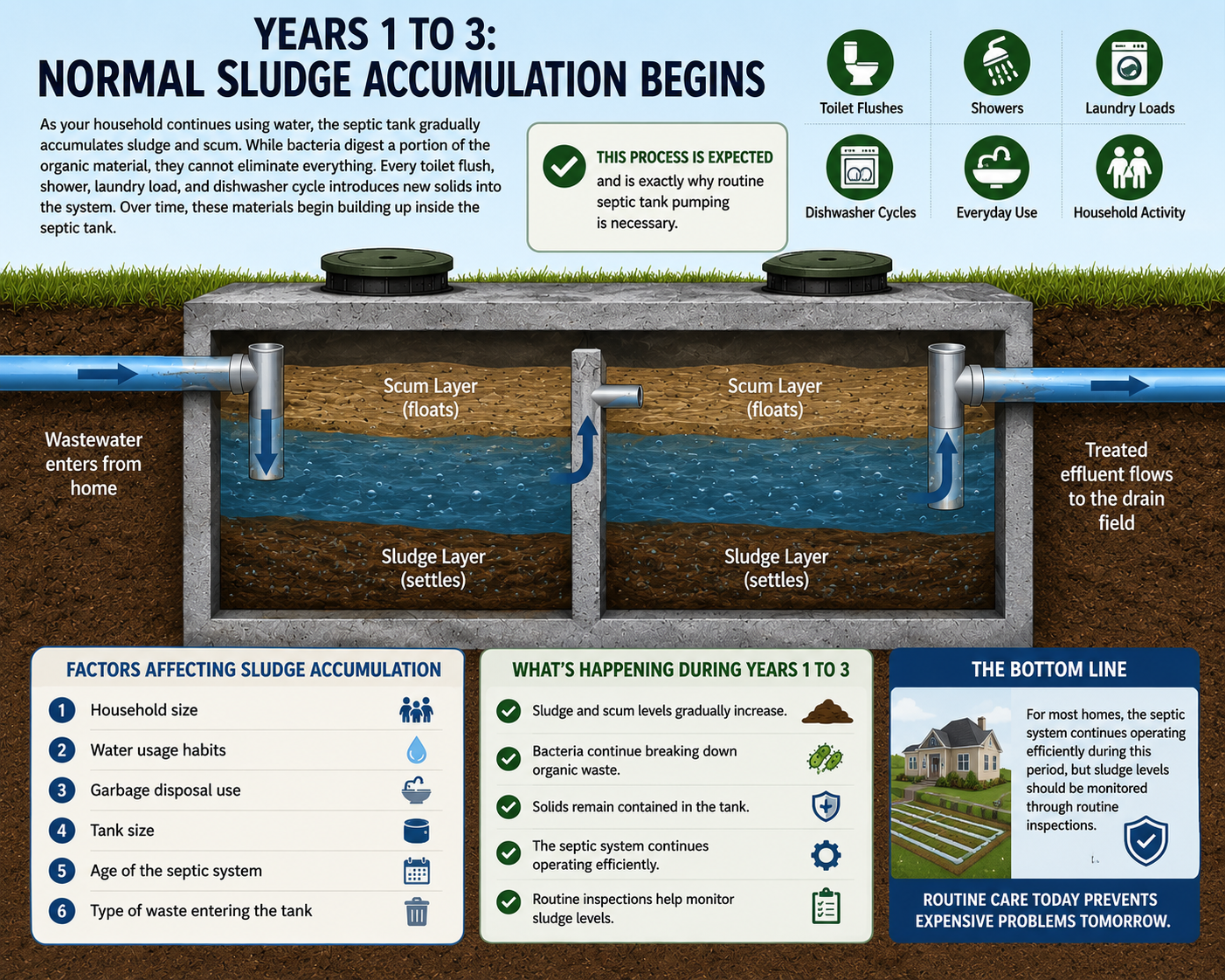
As your household continues using water, the septic tank gradually accumulates sludge and scum. While bacteria digest a portion of the organic material, they cannot eliminate everything. Every toilet flush, shower, laundry load, and dishwasher cycle introduces new solids into the system. Over time, these materials begin building up inside the septic tank.
This process is expected and is exactly why routine septic tank pumping is necessary.
Factors affecting sludge accumulation include:
Household size.
Water usage habits.
Garbage disposal use.
Tank size.
Age of the septic system.
Type of waste entering the tank.
For most homes, the septic system continues operating efficiently during this period, but sludge levels should be monitored through routine inspections.
Years 3 to 5: The Risk Zone Begins
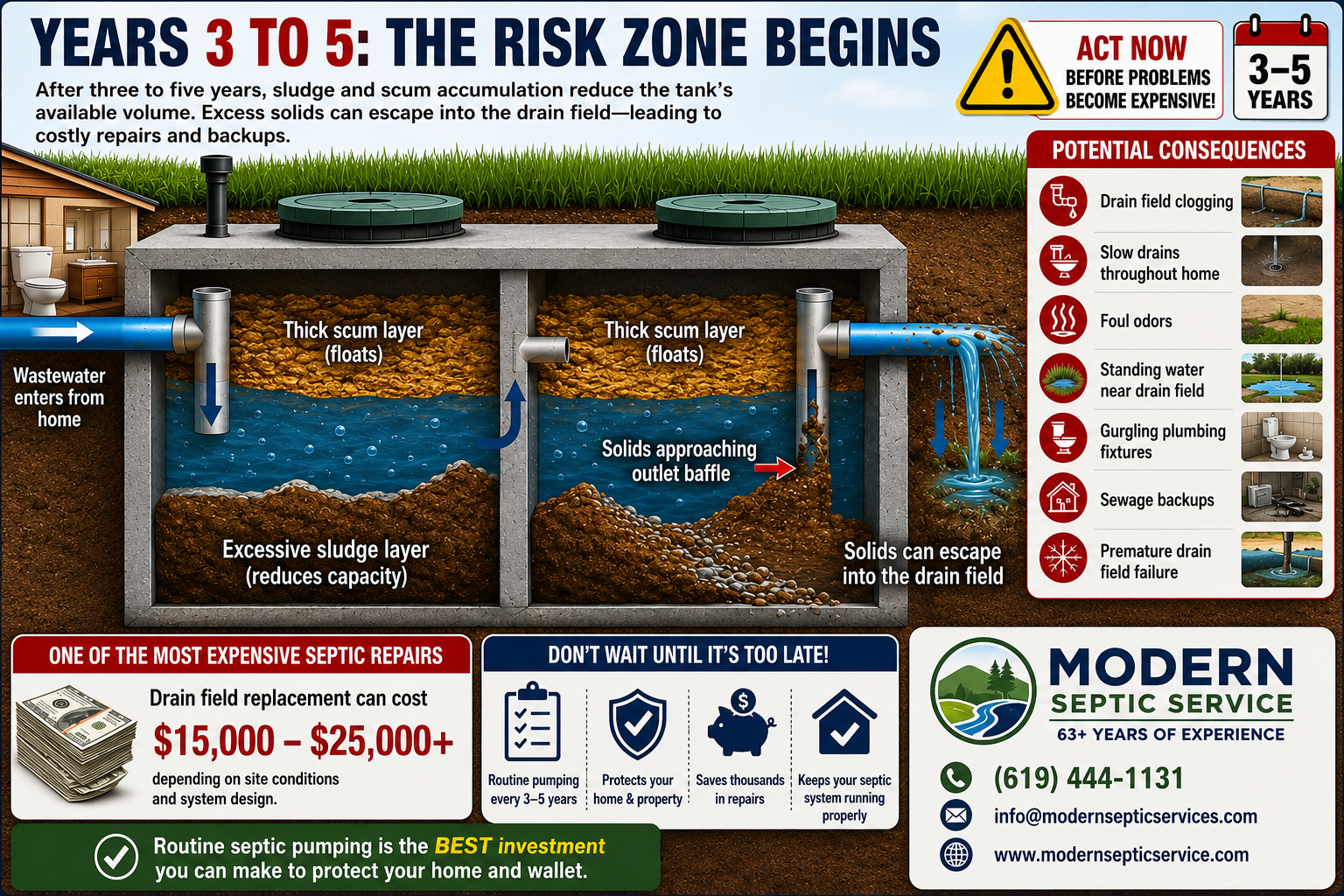
After three to five years, many septic tanks reach the point where sludge and scum accumulation begin reducing available tank volume.
When sludge becomes excessive, the septic tank loses its ability to properly separate solids from wastewater. Eventually, solids can begin escaping into the outlet pipe and enter the drain field.
Once solids reach the drain field, problems become significantly more expensive.
Potential consequences include:
Drain field clogging.
Slow drains throughout the home.
Foul odors.
Standing water near the drain field.
Gurgling plumbing fixtures.
Sewage backups.
Premature drain field failure.
One of the most expensive septic repairs a homeowner can face is drain field replacement. Depending on site conditions and system design, repair costs can range from $15,000-$25,000
Why Septic Tank Pumping Every 3 to 5 Years Is Essential
Routine septic tank pumping is one of the most affordable forms of preventative maintenance available to homeowners. A septic pumping service typically costs a few hundred dollars, while replacing a failed drain field can cost many thousands. Regular pumping protects the most expensive components of your septic system and significantly extends its service life.
Routine septic maintenance helps:
Prevent sewage backups.
Protect your drain field.
Extend septic system lifespan.
Reduce odors.
Improve wastewater treatment.
Prevent emergency repairs.
Protect property value.
Maintain compliance with local regulations.
Waiting until you experience a septic problem often means damage has already occurred. The most cost-effective strategy is to pump your septic tank before problems develop.
Frequently Asked Questions
Is it normal for a septic tank to be full of water after pumping?
Yes. A properly functioning septic tank is always full of liquid. Water begins returning to the tank immediately after pumping.
Should I add bacteria after septic tank pumping?
In most cases, no. Natural bacteria from household wastewater quickly repopulate the septic tank. A healthy system generally does not require additives.
How often should a septic tank be pumped?
Most residential septic tanks should be pumped every 3 to 5 years. However, larger households or smaller tanks may require more frequent service.
Can pumping a septic tank prevent drain field failure?
Yes. Regular septic tank pumping significantly reduces the amount of solids entering the drain field, helping prevent clogs and extending drain field life.
Trust Modern Septic Service for Septic Tank Pumping in San Diego County
For over 63 years, Modern Septic Service has been helping homeowners throughout San Diego County protect their septic systems through professional septic tank pumping, septic tank cleaning, septic inspections, septic certifications, and septic repairs.
Whether you're in El Cajon, Santee, Lakeside, Alpine, Ramona, Poway, Valley Center, Fallbrook, Escondido, or anywhere else in San Diego County, our experienced team is ready to help.
If it has been more than three years since your last septic tank pumping, don't wait for slow drains, odors, or sewage backups to appear. Schedule your septic service today and protect your septic system for years to come.
Call Modern Septic Service at (619) 444-1131 or book online today for professional septic tank pumping and septic service throughout San Diego County.