
Septic Certification, Certificate of Inspection
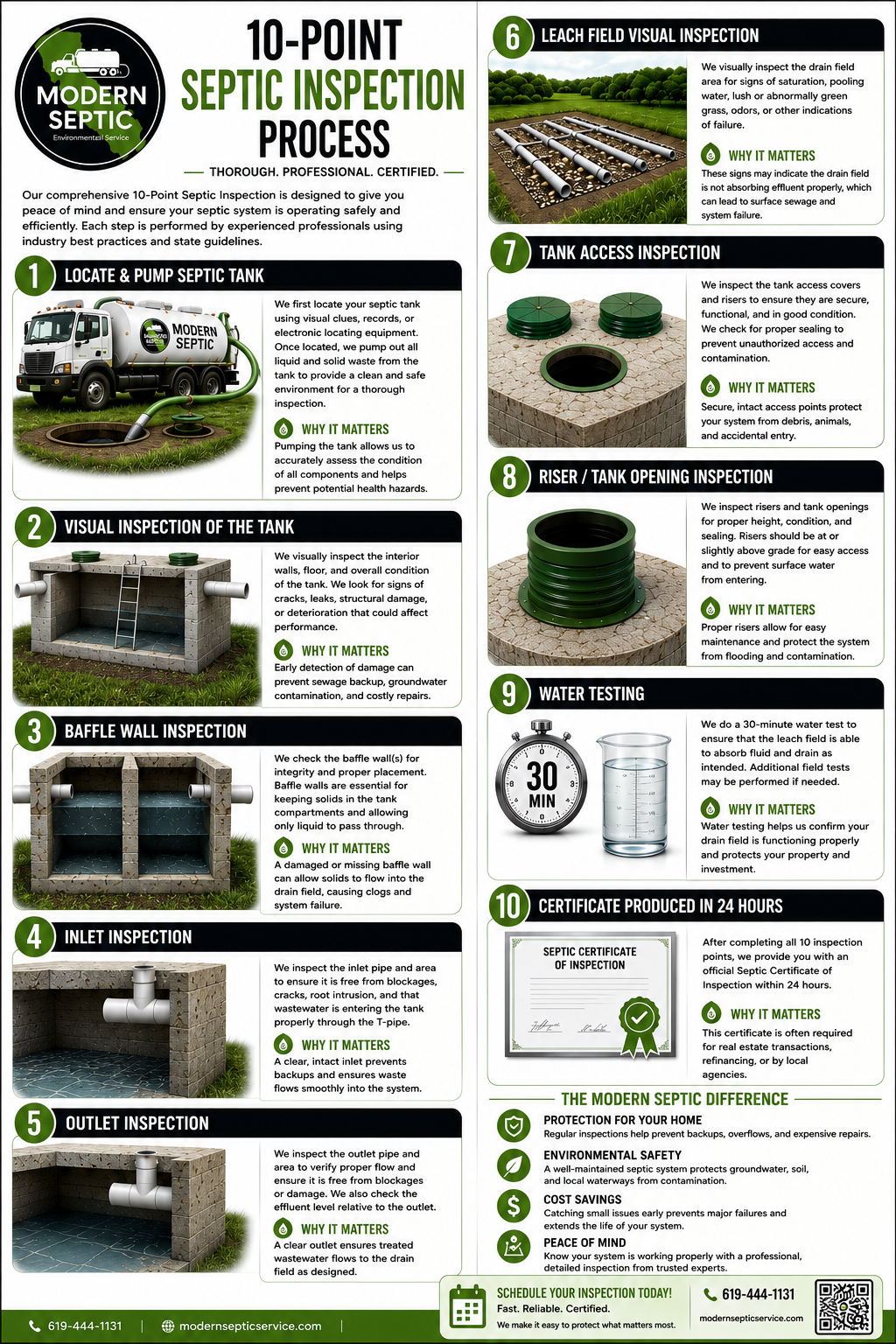
Modern Septic Service 10 Point Septic Certification Steps
What happens if you wait too long to get your Septic Certification?
1. Time Delays During Escrow
Most sellers don't realize a septic certification is needed until escrow is already underway. If the inspection, pumping, or paperwork takes too long. Especially if there is a problem and repairs must be done. It can delay closing and create stress for buyers, agents, and lenders.
2. Unexpected Repair Costs
A septic inspection may uncover issues such as damaged or deteriorated tanks, broken baffles, failing leach fields, missing risers or access lids, broken outlets, and inlets. These repairs can become unexpected expenses during the transaction and will delay the sale.
3. Lack of Septic System Records
Many homeowners have limited knowledge of their septic system's location, size, age, or maintenance history. Missing permits, as-built drawings, or prior inspection reports can cause delays.
4. Finding a Qualified Provider
Not all septic companies have the experience, resources, or capacity to manage the entire septic certification process efficiently. As a result, homeowners and real estate professionals are often left coordinating multiple contractors for inspections, pumping, repairs, engineering, and county compliance requirements—creating unnecessary delays and added stress during escrow.
At Modern Septic Service, we provide a complete one-stop solution designed specifically for real estate transactions. From the initial inspection through certification, repairs, and county documentation, our team manages every aspect of the process to help keep your transaction on schedule. We pride ourselves on responsive communication, expert guidance, and fast turnaround times, ensuring you and your clients have the information needed to make informed decisions and move confidently toward a successful closing.
5. County Compliance Requirements
Your septic system must comply with the Local Agency Management Program (LAMP) requirements for Onsite Wastewater Treatment Systems (OWTS). Many septic systems installed between the 1950s and 1990s were built under regulations that differ from today's standards and may no longer fully comply with current county requirements.
During the septic certification process, systems with undocumented modifications, aging components, or compliance deficiencies may require additional documentation, repairs, upgrades, engineering review, or county approvals before a certification can be issued. These unexpected requirements can create delays during a real estate transaction.
At Modern Septic Service, we specialize in helping homeowners, buyers, sellers, and real estate professionals navigate these challenges. With decades of experience and a full range of inspection, repair, engineering, and compliance solutions, we work diligently to identify the most practical path forward, helping you obtain your certification and keep your real estate transaction on track.

Septic Certification